
 Español
 Portugues
 Pусский
 Français
 Deutsch
 日本語
日本語 한국어
한국어 العربية
 Italiano
 Nederlands
 Ελληνικά
 Svenska
 Polski
 ไทย
ไทย Türk dili
 हिन्दी
 Indonesia
 Melayu
 Tiếng Việt
 中文
中文 dansk
dansk Magyar
 қазақ
қазақ বাংলা
বাংলা עִברִית
 čeština
 Soomaali
 မြန်မာ
 فارسی
فارسی українська
 norsk
norsk Gaeilge
 беларускі
 Română
 ພາສາລາວ
 Filipino
 lietuvių
 Cymraeg
 македонски
 Suomalainen
 slovenský
 o'zbek
 اردو
اردو հայերեն
 Igbo
Igbo български
 سنڌي
سنڌي Shona
Shona සිංහල
සිංහල Hrvatski
 íslenskur
 galego
 català
 Zulu South Africa
 Afrikaans isiXhosa
 ಕನ್ನಡ
ಕನ್ನಡ lëtzebuergesch
 Indonésia Sunda
 Кыргызча
 тоҷикӣ
 Србија
 Twi
Twi Hawaii
 Cebu
Cebu नेपाल
नेपाल euskara
 frissi
 יידיש
יידיש latvija
 slovenija
 kiswahili
 ਪੰਜਾਬ
ਪੰਜਾਬ پښتو
پښتو საქართველოს
 hua moni
 bosna
bosna Kreyòl ayisyen
 Eesti
Eesti Gàidhlig na h-Alba
 Samoa
Samoa Монгол
 Azərbaycan
 አማራ
አማራ Shqipëria
 Malagasy
 Malta
Malta ខ្មែរ
ខ្មែរ Chicheva
 中文(繁体)
 ଓଡିଆ
ଓଡିଆ Setswana
 Afrikaans
 Aymara
 Башҡорт
 Türkmenler
 ትግሪኛ
ትግሪኛ Afaan Oromoo
 অসমীয়া
 Kinyarwanda
 Ilocano
 Wolof
Wolof अवधी
अवधी Oluganda
 Bikol
Bikol Fulɓe
Fulɓe Kikongo
 Sango
Sango ދިވެހި
 Lingala
 मैथिली
 Tsonga
 ꯃꯦꯏ ꯊꯥꯏ꯫
 brezhoneg
 Furlan
 नेवा
नेवा རྫོང་ཁ
 Santali
 Аҧсуа
Аҧсуа Нохчийн
 Чӑваш
Чӑваш Татар
Татар Batak Karo
 دری
دری Diura
Diura Fengyu
 Eʋegbe
 Iban
Iban Fiji
Fiji Tonga
Tonga Inuktitut
 Nahuatl
 maaya yucatec
 Runasimi
 guarani
 Qafar
Qafar Acholi
 Dinka
Dinka Luo
Luo Lundi
Lundi isiNdebele
 Tshivenḓa
 Sesotho sa Leboa
 Sesotho sa Borwa
 Ndumbe
 Papuan Pidgin
 Rromani ćhib
 Thok Nath


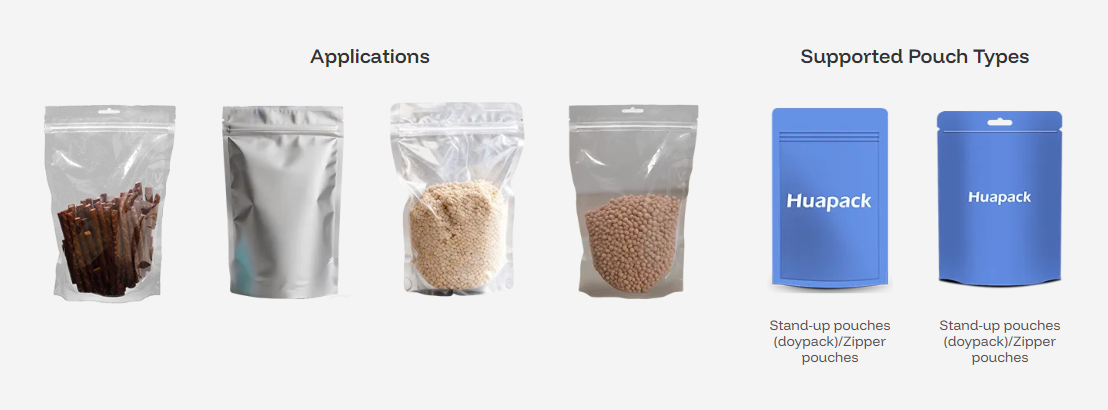

When I design a pouch packaging machine, I always start with one simple question: what does the customer really need to pack? A machine may look impressive, but if it cannot handle the product, pouch material, filling method, or production speed properly, it will not bring much value to a factory.
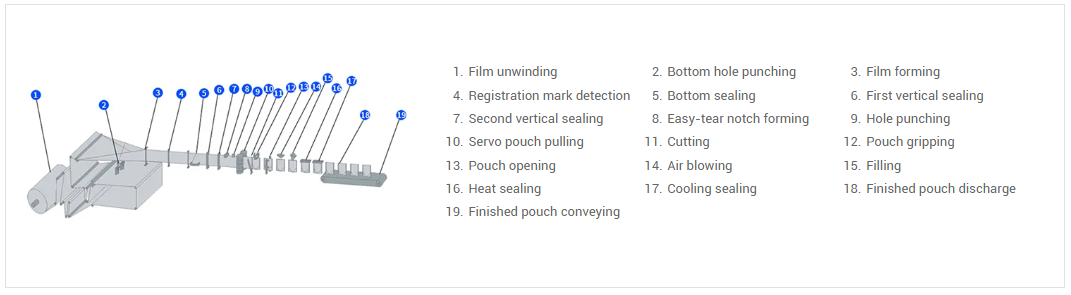
Our Zipper Stand-Up Pouch HFFS Packaging Machine, 2-Nozzle Filling – 240SDZ/280SDZ/330SDZ is built for manufacturers who need a reliable way to produce zipper stand-up pouches from rollstock. I combine film feeding, pouch forming, zipper handling, product filling, heat sealing, cutting, and finished pouch discharge into one continuous packaging process. With a 2-nozzle filling system, the machine can also improve filling efficiency when the product and dosing method are suitable for multi-nozzle operation.
I designed this series around a practical idea: keep the operation accurate, stable, and easy for production workers to understand. The 240SDZ, 280SDZ, and 330SDZ models provide different machine configurations for different pouch widths and production requirements. The exact output depends on pouch size, material, filling volume, film structure, product characteristics, and other selected options.
1. Why I Choose HFFS Technology for Zipper Stand-Up Pouches
HFFS means Horizontal Form Fill Seal. In simple words, the machine starts with flexible packaging film on a roll and turns that film into finished pouches through a horizontal production process. Instead of buying empty pouches and filling them separately, I can integrate pouch forming and filling into the same production line.
This is especially useful when a customer wants to make a large number of stand-up pouches with consistent dimensions. The rollstock is guided through the machine, shaped into the required pouch structure, filled, sealed, and cut. A zipper can be incorporated into the pouch structure so the final package is convenient for consumers to open and close.
I pay particular attention to film tracking and sealing because these two areas have a direct effect on pouch quality. If the film moves poorly, the printed pattern may not line up correctly. If the sealing temperature, pressure, or timing is not suitable for the film structure, the finished pouch may have weak or uneven seals.
For this reason, I do not treat the machine as just a collection of motors and heaters. The film, zipper, filling material, pouch dimensions, and sealing conditions all need to work together. This approach is important for manufacturers looking for a zipper stand-up pouch packaging machine rather than a general-purpose packing machine.
| Packaging Stage | What I Control | Production Benefit |
|---|---|---|
| Film Feeding | Film movement and positioning | More stable pouch forming |
| Pouch Forming | Pouch shape and dimensions | Consistent finished bags |
| Zipper Integration | Zipper position and sealing process | Convenient resealable packaging |
| 2-Nozzle Filling | Filling timing and dosing coordination | Suitable for higher-efficiency filling layouts |
| Heat Sealing | Temperature, pressure, and timing | Reliable package closure |
| Cutting & Discharge | Cutting position and pouch transfer | Clean finished pouch output |
Source: Huapack product configuration information supplied for the Zipper Stand-Up Pouch HFFS Packaging Machine series.
2. How My 2-Nozzle Zipper Pouch Packaging Machine Works
The working process is straightforward, even though the machine itself contains several coordinated systems. I start with rollstock packaging film. The film enters the feeding section and moves through the forming area under controlled tension and positioning.
Depending on the selected pouch design, the film is shaped into the required stand-up pouch structure. The zipper is handled as part of the pouch-forming and sealing process. The goal is to keep the zipper and pouch edges correctly aligned before filling begins.
Once the pouch is ready for filling, the 2-nozzle filling system works according to the selected dosing configuration. Two filling nozzles can operate in a coordinated manner, making better use of the available production cycle when the product is suitable for this arrangement.
The machine then moves the filled pouch into the sealing section. Heat is applied to the sealing area according to the selected film structure and process settings. After sealing, the pouch is cut and transferred out of the machine.
In actual production, I recommend testing the complete packaging material and product before fixing final operating parameters. A powder, granular product, sauce, or liquid does not behave in the same way. Even two films with similar appearance can require different sealing conditions. That is why product testing is an important part of a practical packaging project.
Typical HFFS Workflow
Rollstock film feeding
Film positioning and tension control
Pouch forming
Zipper integration or handling
Pouch opening and filling preparation
Two-nozzle product filling
Heat sealing
Pouch cutting
Finished pouch discharge
Optional downstream inspection, coding, conveying, or cartoning
This continuous structure is one of the main reasons I recommend HFFS equipment for customers who need repeatable stand-up pouch production at a larger scale.
3. Main Features I Built Into the 240SDZ, 280SDZ and 330SDZ Series
I know that a packaging machine is not purchased just because it has many functions. The real value comes from whether those functions solve production problems. With this series, I focus on stable pouch forming, flexible filling, accurate control, reliable sealing, and convenient operation.
Servo-Driven Operation
Servo-driven motion gives me better control over key machine movements. Parameters such as pouch length, movement timing, and operating speed can be adjusted digitally. This is useful when a factory handles more than one pouch specification.
Two-Nozzle Filling
The two-nozzle configuration is designed to support a more efficient filling arrangement. It can be especially useful when the product and dosing method allow two filling points to work within the same packaging cycle. The final filling capacity should always be confirmed through product testing rather than assumed from the number of nozzles alone.
Zipper Stand-Up Pouch Production
Stand-up pouches with zippers are popular because they combine shelf appeal with consumer convenience. The pouch can stand upright on a retail shelf and can be opened and closed after the first use. My machine is intended for this type of flexible packaging format.
Flexible Product Compatibility
Depending on the selected filling system, the machine can be configured for products such as granules, powders, liquids, sauces, and other flowable materials. I always match the filling system to the product instead of using one dosing method for everything.
Digital Parameter Adjustment
Operators can adjust important production parameters through the machine control system. This makes product changeovers easier and reduces the need to repeatedly adjust mechanical components by hand.
Easy Line Integration
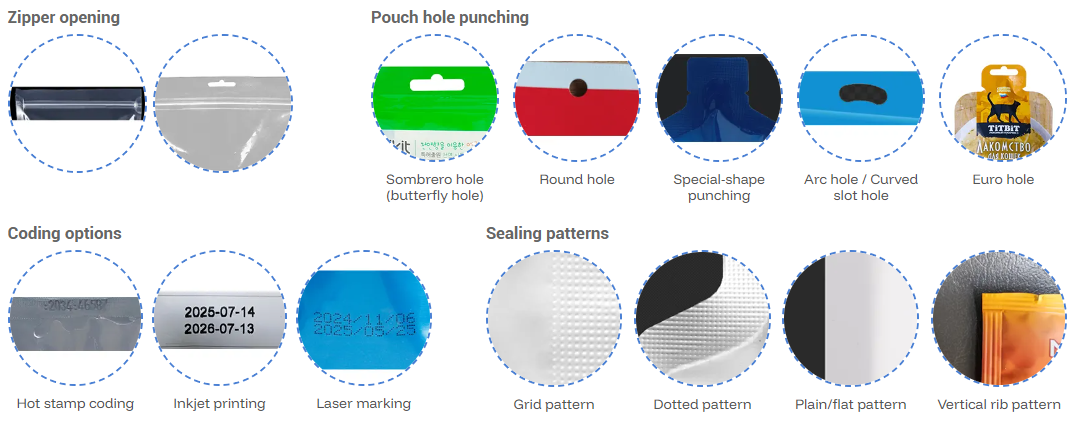
I can also design the machine to connect with upstream and downstream equipment. Depending on the project, this may include product feeding, weighing, coding, inspection, conveying, metal detection, case packing, or other packaging equipment.
4. Model Comparison: 240SDZ vs. 280SDZ vs. 330SDZ
I offer three model references in this series: 240SDZ, 280SDZ, and 330SDZ. The model selection should not be based on the model number alone. I normally consider pouch width, pouch length, filling volume, film type, product characteristics, desired capacity, and available production space before recommending a configuration.
| Model | Series Type | Filling Configuration | Typical Selection Consideration |
|---|---|---|---|
| 240SDZ | Servo-driven HFFS zipper stand-up pouch | 2 nozzles | Suitable when a more compact pouch format is required |
| 280SDZ | Servo-driven HFFS zipper stand-up pouch | 2 nozzles | Suitable for medium-format production requirements |
| 330SDZ | Servo-driven HFFS zipper stand-up pouch | 2 nozzles | Suitable when a larger pouch format or wider packaging structure is needed |
Source: Huapack product model information supplied for this product page. Actual pouch dimensions, speed, and filling range should be confirmed against the final machine configuration.
In other words, I do not promise one fixed speed or one universal pouch size for every project. Packaging performance changes with pouch dimensions, material thickness, product flow, filling accuracy, sealing requirements, and machine configuration. This is important when comparing industrial pouch packaging machines from different suppliers.
5. Where I Use This Zipper Stand-Up Pouch Packaging Machine
The stand-up zipper pouch is a flexible packaging format, so I see applications across many industries. The filling system is selected according to the product, while the pouch-forming section is configured around the required package structure.
Food Packaging
Food is one of the most common application areas. The machine can be considered for products such as nuts, snacks, grains, seasoning products, dried foods, pet treats, and other suitable products that benefit from resealable packaging.
For products that are sensitive to moisture or air, the pouch material and sealing design are especially important. A good packaging machine cannot compensate for unsuitable packaging film, so I always look at the complete package rather than only the machine.
Pet Food and Pet Treats
Zipper pouches are practical for pet food because consumers may not use the entire package at one time. A resealable pouch can make repeated opening more convenient. The filling system can be selected based on whether the product is granular, powdered, or another suitable form.
Personal Care and Household Products
Some personal care and household products can also be packed in flexible stand-up pouches. Depending on the product, the filling system may need to handle liquids, pastes, or powders. For liquid products, I pay close attention to nozzle control and sealing cleanliness.
Agricultural and Industrial Materials
The machine can also be considered for suitable agricultural and industrial products, including seeds, certain granular materials, powders, and additives. The key requirement is that the material can be handled reliably by the selected feeding and filling system.
| Industry | Example Products | Packaging Reason |
|---|---|---|
| Food | Nuts, snacks, grains, seasonings | Resealable and shelf-friendly format |
| Pet Food | Pet treats, dry products | Convenient repeated opening |
| Personal Care | Selected powders, liquids, pastes | Flexible package design |
| Agriculture | Seeds and suitable granular materials | Lightweight flexible packaging |
| Industrial | Selected powders and granules | Automated portion packaging |
Source: Application categories based on Huapack's supplied product and industry information. Product suitability depends on material characteristics and the final filling configuration.
6. How I Approach Machine Manufacturing and Customization
From my experience in pouch packaging machinery, I have learned that the most important part of manufacturing is not simply assembling the machine. It is making sure that the machine works as a complete system.
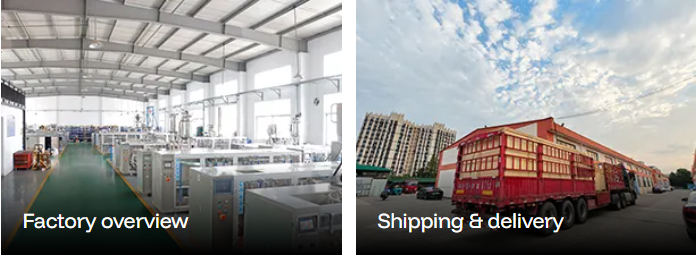
At Huapack, I work around the customer's actual packaging requirements. Shanghai Huacheng Packing Machinery Company was established in 2015 in Songjiang District, Shanghai. We bring R&D, manufacturing, sales, and technical service together, with a dedicated focus on pouch packaging machinery.
For a new project, I first look at the product. Is it free-flowing? Does it contain oil? Is it dusty? Is it sticky? Does it need gentle handling? These details affect the filling method and machine setup.
Then I look at the pouch. I need to understand its width, length, material structure, zipper design, thickness, and sealing requirements. The film and zipper should be tested because their behavior during forming and heat sealing can affect the final pouch.
After that, I consider production capacity. A customer producing a few hundred kilograms per hour may need a different configuration from a large factory running several shifts every day. This is where our experience with different pouch formats and complete packaging lines becomes useful.
We can also consider optional functions such as coding, product feeding, inspection, conveying, or connection with other packaging machines. My goal is to make the final system practical for the customer's workshop instead of forcing the customer to change the entire production process around one machine.
What I Check Before Finalizing a Machine
Product type and flow characteristics
Target filling weight or volume
Pouch width and length
Rollstock film structure and thickness
Zipper design and position
Required sealing performance
Expected production capacity
Available factory space
Upstream and downstream equipment
Operator and maintenance requirements
This step-by-step approach helps us avoid a common problem in packaging projects: choosing a machine first and discovering later that the product or pouch material does not match it.
7. Why I Recommend Huapack for a Complete Pouch Packaging Project
I do not see a pouch packaging machine as an isolated piece of equipment. For many customers, the machine is only one part of a larger production system. That is why Huapack focuses on pouch packaging machinery as well as complete line integration.
Our experience covers automated weighing, pouch filling, sealing, and complete packaging line design. We work with different pouch formats and different product categories, including food, dairy, health nutrition, medical nutrition, pharmaceuticals, personal care, agrochemicals, and pet food.
When a customer needs a servo-driven zipper stand-up pouch packaging machine, I can look beyond the basic machine specification. I can help consider the filling method, pouch structure, line layout, and connection with other equipment.
I also believe technical communication matters. A machine should not be difficult for the operator to understand. Clear parameter settings, sensible controls, and a practical machine layout can make daily production much easier.
For projects with different products or pouch sizes, we can develop a flexible configuration based on the customer's production plan. For larger projects, we can also provide turnkey packaging solutions rather than only supplying one standalone machine.
Most importantly, I prefer to discuss real production conditions before making a final recommendation. The right machine is not necessarily the one with the largest number of functions. It is the one that matches the product, pouch, capacity, operators, and long-term production plan.
Frequently Asked Questions About the Zipper Stand-Up Pouch HFFS Packaging Machine
1. What is a zipper stand-up pouch HFFS packaging machine?
It is a horizontal form-fill-seal packaging machine designed to produce stand-up pouches from rollstock film. In this configuration, zipper handling, pouch forming, filling, heat sealing, cutting, and finished pouch discharge are integrated into the packaging process.
2. What does the 2-nozzle filling system mean?
It means the machine is configured with two filling nozzles. When the product and dosing method are suitable, the two-nozzle arrangement can support a more efficient filling cycle. Actual filling speed and accuracy depend on the product and selected dosing equipment.
3. Can I use the machine for different products?
Yes, the machine can be configured for different product types, but I do not recommend assuming that one filling system is suitable for every product. Powders, granules, liquids, and pastes have different flow characteristics, so the correct dosing equipment should be selected for each application.
4. Can the pouch size be changed?
The machine can be configured for specified pouch dimensions, and parameter adjustments can support production changes within the designed range. The exact changeover range depends on the final machine configuration and pouch structure.
5. What pouch materials can be used?
The correct film structure depends on the product, sealing requirements, barrier requirements, zipper, and final application. I recommend testing the actual packaging material before mass production.
6. Can I add a date coder or other equipment?
Yes. Depending on the project, the machine can be connected with coding, product feeding, inspection, conveying, and other upstream or downstream equipment. I can plan these connections as part of a complete pouch packaging line.
7. Which model should I choose: 240SDZ, 280SDZ, or 330SDZ?
I normally choose the model after reviewing pouch dimensions, filling volume, product characteristics, film structure, target capacity, and production layout. The model number alone is not enough to determine the best machine.
8. Can Huapack provide a complete packaging line?
Yes. In addition to standalone pouch packaging machines, Huapack can develop complete packaging lines and turnkey projects. We can design the system around product characteristics, packaging format, production capacity, and the customer's actual factory requirements.
Final Thoughts: A Practical Machine for Modern Zipper Pouch Production
I built the Zipper Stand-Up Pouch HFFS Packaging Machine, 2-Nozzle Filling – 240SDZ/280SDZ/330SDZ for manufacturers who want to move from separate packaging steps to a more connected and automated production process.
Its main strengths are the HFFS production structure, servo-driven control, zipper stand-up pouch capability, two-nozzle filling configuration, digital parameter adjustment, and compatibility with broader packaging line solutions. These features make it a useful option for food, pet food, personal care, agricultural, and selected industrial applications.
At the same time, I believe good packaging equipment should be selected based on real production conditions. Pouch dimensions, film, zipper, product behavior, filling method, sealing requirements, and target output all matter. That is why I work with customers to understand these details before finalizing a machine configuration.
If you are comparing zipper stand-up pouch packaging machines, servo-driven HFFS pouch packaging equipment, or a 2-nozzle pouch filling machine, I recommend looking beyond headline speed. Stable pouch forming, accurate filling, reliable sealing, simple operation, and easy integration are what make a machine useful day after day.
With our experience in pouch packaging machinery, manufacturing, technical service, and complete line integration, I can help develop a packaging solution around your actual product and production goals—not simply sell you a machine and leave the rest to you.



 WhatsApp
 Phone
Phone E-mail