
 Español
 Portugues
 Pусский
 Français
 Deutsch
 日本語
日本語 한국어
한국어 العربية
 Italiano
 Nederlands
 Ελληνικά
 Svenska
 Polski
 ไทย
ไทย Türk dili
 हिन्दी
 Indonesia
 Melayu
 Tiếng Việt
 中文
中文 dansk
dansk Magyar
 қазақ
қазақ বাংলা
বাংলা עִברִית
 čeština
 Soomaali
 မြန်မာ
 فارسی
فارسی українська
 norsk
norsk Gaeilge
 беларускі
 Română
 ພາສາລາວ
 Filipino
 lietuvių
 Cymraeg
 македонски
 Suomalainen
 slovenský
 o'zbek
 اردو
اردو հայերեն
 Igbo
Igbo български
 سنڌي
سنڌي Shona
Shona සිංහල
සිංහල Hrvatski
 íslenskur
 galego
 català
 Zulu South Africa
 Afrikaans isiXhosa
 ಕನ್ನಡ
ಕನ್ನಡ lëtzebuergesch
 Indonésia Sunda
 Кыргызча
 тоҷикӣ
 Србија
 Twi
Twi Hawaii
 Cebu
Cebu नेपाल
नेपाल euskara
 frissi
 יידיש
יידיש latvija
 slovenija
 kiswahili
 ਪੰਜਾਬ
ਪੰਜਾਬ پښتو
پښتو საქართველოს
 hua moni
 bosna
bosna Kreyòl ayisyen
 Eesti
Eesti Gàidhlig na h-Alba
 Samoa
Samoa Монгол
 Azərbaycan
 አማራ
አማራ Shqipëria
 Malagasy
 Malta
Malta ខ្មែរ
ខ្មែរ Chicheva
 中文(繁体)
 ଓଡିଆ
ଓଡିଆ Setswana
 Afrikaans
 Aymara
 Башҡорт
 Türkmenler
 ትግሪኛ
ትግሪኛ Afaan Oromoo
 অসমীয়া
 Kinyarwanda
 Ilocano
 Wolof
Wolof अवधी
अवधी Oluganda
 Bikol
Bikol Fulɓe
Fulɓe Kikongo
 Sango
Sango ދިވެހި
 Lingala
 मैथिली
 Tsonga
 ꯃꯦꯏ ꯊꯥꯏ꯫
 brezhoneg
 Furlan
 नेवा
नेवा རྫོང་ཁ
 Santali
 Аҧсуа
Аҧсуа Нохчийн
 Чӑваш
Чӑваш Татар
Татар Batak Karo
 دری
دری Diura
Diura Fengyu
 Eʋegbe
 Iban
Iban Fiji
Fiji Tonga
Tonga Inuktitut
 Nahuatl
 maaya yucatec
 Runasimi
 guarani
 Qafar
Qafar Acholi
 Dinka
Dinka Luo
Luo Lundi
Lundi isiNdebele
 Tshivenḓa
 Sesotho sa Leboa
 Sesotho sa Borwa
 Ndumbe
 Papuan Pidgin
 Rromani ćhib
 Thok Nath


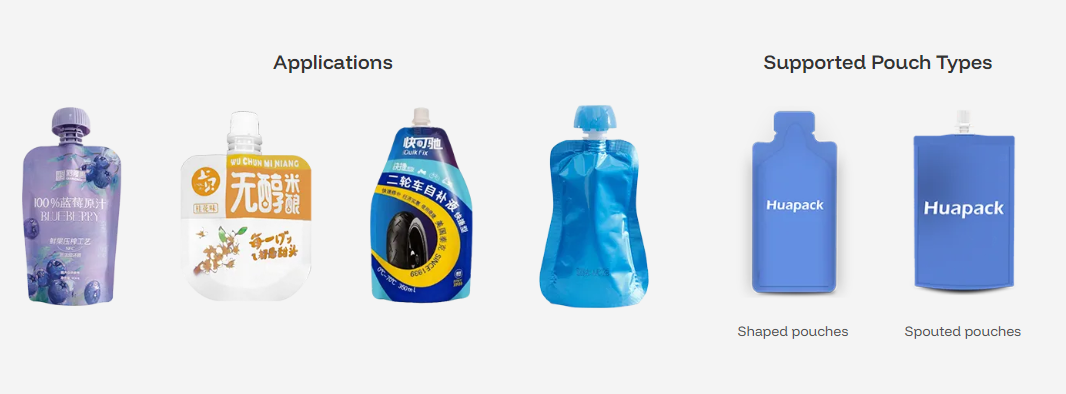
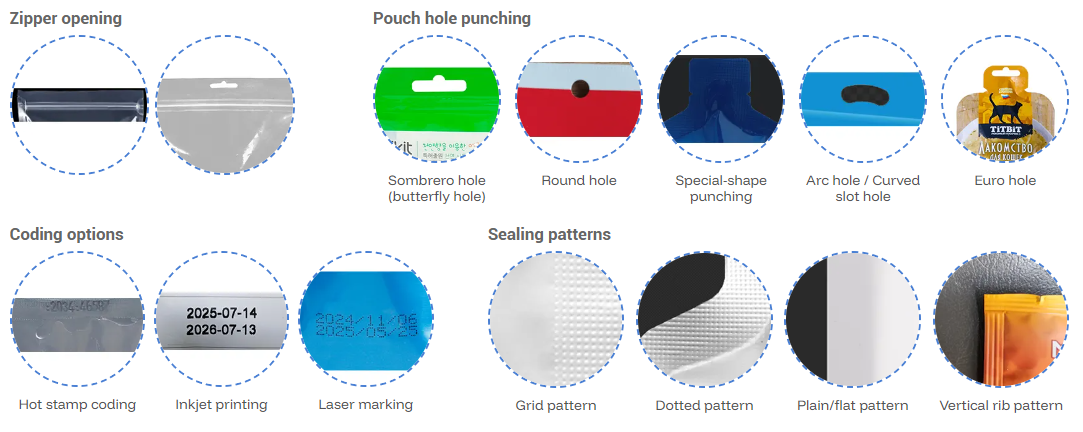

When I look at a modern liquid packaging line, I want to see more than just a filling machine. I want the pouch to arrive in the correct position, the product to be filled cleanly and consistently, the spout to be handled properly, and the cap to be tightened securely before the finished pouch leaves the machine. That is exactly where our Spouted Pouch Filling and Capping Machine fits.
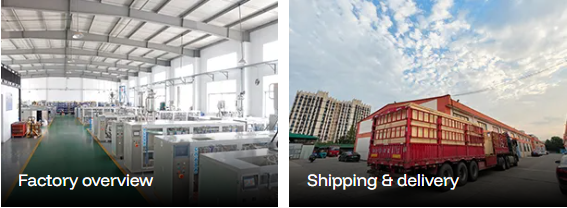
At Shanghai Huacheng Packing Machinery Company, also known as Huapack, we have focused on pouch packaging machinery since 2015. We combine research and development, manufacturing, sales, and technical service in one operation. Our work covers automatic weighing, pouch filling, sealing, conveying, and complete packaging-line integration.
Our spouted pouch filling and capping machine is designed for pre-made spouted stand-up pouches. Instead of forming the pouch from film, the machine works with ready-made pouches that already have a spout. It handles pouch feeding, positioning, filling, capping, and finished-product discharge in a continuous automated process.
I find this format especially useful for liquid and semi-liquid products such as juice, yogurt, jam, sauces, honey, detergent, personal care liquids, nutritional products, agricultural liquids, and other products that benefit from a convenient spout.
The real advantage is simple: I can reduce manual handling while keeping the filling and capping process organized. At the same time, the machine can be adjusted for different pouch sizes, filling volumes, product properties, and production requirements.
```1. What Is a Spouted Pouch Filling and Capping Machine?
```A spouted pouch filling and capping machine is an automated packaging machine designed to fill products into pre-made pouches with a built-in spout and then close the spout with a cap.
The pouch is usually supplied to the machine as a finished bag. The machine does not need to unwind packaging film, form the pouch, or create the basic pouch structure. This makes the process different from a traditional vertical form-fill-seal machine.
I see this as one of the main reasons why spouted pouch packaging is attractive for certain liquid products. The pouch can be designed in different shapes and sizes, while the spout gives the consumer a practical way to pour or squeeze the product.
Typical Process
Pre-made spouted pouches are loaded into the machine.
The pouch is picked and transferred into the filling position.
The pouch is accurately positioned.
The filling system delivers the required amount of product.
The pouch is moved to the capping station.
The cap is positioned and tightened.
The finished pouch is discharged to the next process.
Depending on the production line, the finished pouch can then move to inspection, labeling, secondary packaging, cartoning, or other downstream equipment.
Why Use a Spouted Pouch?
A spouted pouch combines flexible packaging with a convenient dispensing opening. For products that are poured, squeezed, or used in small amounts, this can be very practical.
| Packaging Format | Typical Product Type | Consumer Use | Filling Equipment Consideration |
|---|---|---|---|
| Spouted stand-up pouch | Juice, sauce, yogurt | Pouring or squeezing | Liquid or semi-liquid filling |
| Spouted pouch | Honey, jam, syrup | Controlled dispensing | Viscosity-sensitive filling |
| Spouted pouch | Detergent, cleaner | Pouring | Product compatibility and clean filling |
| Spouted pouch | Personal care liquids | Squeezing or pouring | Stable dosing and pouch handling |
Source: Huapack application scope and general flexible-packaging engineering practice. Actual pouch and product compatibility should be confirmed through product testing.
```2. How Our Spouted Pouch Filling and Capping Machine Works
```I prefer to explain the machine in a simple way. Think of it as a series of small jobs performed in the correct order. Each station handles one part of the pouch packaging process.
Step 1: Pouch Loading
The process starts with pre-made spouted pouches. Operators load the pouches into the feeding section, where they are arranged for automatic handling.
Because the pouch is already made, there is no film forming process at this stage. This can simplify the production flow for manufacturers that purchase pre-made spouted pouches.
Step 2: Pouch Transfer and Positioning
The pouch needs to arrive at the filling station in a stable position. If the pouch moves around too much, filling accuracy and product cleanliness can be affected.
Our machine therefore uses controlled pouch handling and positioning before filling begins.
Step 3: Product Filling
The filling system sends the liquid or semi-liquid product into the pouch through the spout or designated filling path.
The filling method depends on the product. Water-like liquids behave very differently from thick sauces, honey, jam, cream, or other high-viscosity products. This is why I do not recommend selecting a filler only by looking at the product name.
Step 4: Capping
After filling, the pouch moves to the capping station. The cap is positioned and tightened according to the machine configuration.
Proper cap handling is important because a cap that is too loose may lead to leakage, while excessive tightening may damage the closure or create unnecessary stress.
Step 5: Finished Pouch Discharge
Once the cap is applied, the finished pouch leaves the machine. It can then be transferred to another conveyor or connected directly to downstream equipment.
This complete sequence helps reduce manual operations. Instead of an operator filling and manually tightening each pouch, the machine performs the repetitive work in a controlled process.
```3. Main Features I Focus on When Designing Spouted Pouch Packaging Equipment
```A good Automatic Spouted Pouch Filling Machine should not only run fast. I also care about pouch stability, filling consistency, cap handling, cleaning, adjustment, and the ability to connect with other machines.
Pre-Made Pouch Compatibility
The machine is designed around pre-made spouted pouches, which means the basic pouch manufacturing process is completed before the pouch reaches our equipment.
Flexible Pouch Size Adjustment
Different customers use different pouch dimensions and filling volumes. Our machine can be configured and adjusted according to the required pouch specifications within the designed operating range.
Liquid and Semi-Liquid Filling
We can design filling solutions for different product properties. Low-viscosity liquids, thicker sauces, pastes, and similar products may require different filling arrangements.
Automatic Cap Tightening
The capping section performs the repetitive task of applying and tightening the cap. This reduces manual work and helps make the closure process more consistent.
Reduced Manual Handling
Manual pouch handling can introduce unnecessary variation. Automation gives the operator a simpler job: load materials, monitor the machine, check the process, and perform normal maintenance.
Connection With Upstream and Downstream Equipment
I design packaging equipment with the complete line in mind. The machine can be connected with conveyors, product supply systems, inspection equipment, labeling systems, cartoning equipment, and other downstream processes according to the project.
Simple Parameter Adjustment
Different pouch sizes and products require different settings. Operators need a practical way to adjust filling and handling parameters without turning every format change into a major engineering project.
```4. Filling Different Liquid Products: What I Check First
```One of the most important lessons I have learned in packaging machinery is that “liquid” is too broad a description. Two products can both be liquids but behave completely differently inside a filling system.
Before selecting the filling configuration, I normally look at viscosity, temperature, product structure, foaming behavior, particles, filling volume, and the required production rate.
| Product Characteristic | Typical Example | What I Consider |
|---|---|---|
| Low viscosity | Juice, water-like beverages | Flow control and filling speed |
| Medium viscosity | Yogurt, liquid sauces | Stable dosing and product flow |
| High viscosity | Honey, thick sauces, jam | Filling method and product movement |
| Semi-liquid or paste | Personal care gels, creams | Filling pressure and clean product transfer |
| Particle-containing liquid | Selected sauces or food products | Particle size and passage through the filling path |
Source: General filling-machine engineering principles and Huapack's stated application range. Final filling-system selection should be verified through product trials.
Viscosity Matters
A thin liquid can flow easily through a filling system. A thick product needs more controlled movement. If the filling system is not matched to the product, the result can be unstable filling, slow production, or excessive product residue around the spout.
Foaming Matters
Some liquids create foam during filling. Excess foam can make the process messy and may affect the apparent fill level. Filling speed and nozzle or filling-path design may need to be adjusted.
Product Temperature Matters
Some products change viscosity when temperature changes. A product that flows well when warm may become much thicker when cool. For this reason, I consider the actual production temperature rather than relying only on room-temperature samples.
Product Cleanliness Matters
With food and personal care products, I pay attention to how much product remains around the spout and filling area. A cleaner filling process makes downstream capping easier and helps keep the machine easier to maintain.
```5. Applications of Spouted Pouch Filling and Capping Machines
```The biggest advantage of spouted pouches is their flexibility. They can be used for products that consumers need to pour, squeeze, or dispense. That makes the format suitable for several industries.
Food and Beverage
Food is one of the most obvious applications. We can develop filling solutions for products such as juice, yogurt, jam, honey, fruit products, sauces, dressings, and other liquid or semi-liquid foods.
The exact filling system depends on the product properties. For example, a thin fruit drink and thick jam should not automatically use the same filling setup.
Dairy Products
Yogurt and other dairy products can be packaged in spouted pouches when the packaging format suits the product and market. Product temperature, viscosity, hygiene, and cleaning requirements all need to be considered.
Personal Care Products
Shampoo, conditioner, liquid soap, cleansing products, and other personal care products can be suitable for spouted pouch packaging.
Household Cleaning Products
Laundry detergent, cleaning liquids, and similar household products can benefit from the easy-pour format of a spouted pouch.
Pharmaceutical and Nutrition Products
Certain nutritional liquids and external-use liquid or semi-liquid products can also be considered. These applications require careful material selection, hygiene design, product compatibility, and compliance with the relevant regulations.
Agricultural Products
Agricultural nutrient liquids and selected agrochemical formulations may also be packaged in spouted pouches. However, chemical compatibility and safety requirements must be reviewed before selecting the machine configuration.
| Industry | Example Products | Key Packaging Requirement |
|---|---|---|
| Food | Juice, jam, honey, sauces | Stable filling and clean closure |
| Dairy | Yogurt and dairy liquids | Hygiene and product compatibility |
| Personal care | Shampoo, conditioner, liquid soap | Viscosity handling and leak control |
| Household chemicals | Detergent, cleaning liquid | Material compatibility and secure capping |
| Nutrition | Nutritional liquids | Controlled filling and hygienic design |
| Agriculture | Nutrient liquids, selected formulations | Chemical compatibility and safe handling |
Source: Huapack's stated application areas and general flexible-pouch packaging practice. Product-contact materials and machine configuration must be confirmed for the specific product.
```6. Hygienic Design, Cleaning, and Leak Control
```For me, packaging performance is not only about filling speed. A machine that is difficult to clean or leaves product around the filling area can create unnecessary problems for operators.
This is especially important in food and dairy applications. The Codex General Principles of Food Hygiene state that equipment and containers that come into contact with food should be designed so they can be adequately cleaned, disinfected, and maintained when necessary.
Keep the Product Path Practical
The product-contact path should be designed according to the product. Materials, seals, hoses, valves, and other components should be compatible with the intended product and cleaning conditions.
Reduce Product Residue
Product residue around the spout can create a messy filling station. I therefore pay attention to the relationship between filling speed, product viscosity, filling path, pouch position, and the spout structure.
Secure Capping
The cap is the final closure. The machine needs to handle the cap correctly and apply the appropriate tightening process for the selected closure system.
I avoid promising that any machine can “completely eliminate leakage” because leakage can also be caused by pouch material, spout quality, cap design, seal condition, product compatibility, transportation, or incorrect operating parameters.
Food Contact Materials
For food applications, the packaging material and relevant food-contact components must meet the requirements applicable to the target market and intended conditions of use. The U.S. FDA explains that the regulatory status of food-contact materials depends on the substances used and their intended conditions of use.
In other words, I do not treat “food grade” as a universal label. The exact product, packaging material, contact conditions, and destination market all matter.
```7. How We Develop a Spouted Pouch Filling and Capping Solution
```At Huapack, I prefer to start with the production problem instead of starting with a machine model. A packaging machine should fit the product and pouch, not the other way around.
1. Product Evaluation
I first need to understand what will be filled. Product name, viscosity, temperature, density, particles, foaming behavior, and other characteristics can affect the filling design.
2. Pouch Evaluation
I then look at the pouch dimensions, spout position, pouch material, cap type, filling volume, and pouch construction.
3. Capacity Planning
Production targets determine how the machine should be arranged. A small production line and a high-output factory may need completely different automation levels.
4. Filling System Selection
The filling system is selected around the product. Thin liquids, viscous products, pastes, and particle-containing liquids can require different approaches.
5. Capping System Design
Cap size, cap shape, thread design, pouch spout construction, and required closure performance are considered when designing the capping section.
6. Line Integration
If required, we can consider upstream product supply and downstream packaging equipment. The goal is to make the entire line work as one system.
7. Testing and Adjustment
Product testing is an important part of the process. I want to see how the real product behaves, not just how water behaves in a laboratory test. This is particularly important for thick, sticky, foaming, or particle-containing products.
This engineering process is also why I avoid publishing one fixed filling speed or accuracy number for every application. Real performance depends on the product, pouch, filling volume, machine configuration, and production conditions.
```8. Why I Recommend Huapack for Spouted Pouch Filling Projects
```Huapack was established in 2015 in Songjiang District, Shanghai. We focus on pouch packaging machinery and combine R&D, manufacturing, sales, and technical service in one operation.
Our experience covers a wide range of pouch formats and packaging applications. We do not only supply individual machines. When the project requires it, we can design a complete pouch packaging line around the customer's product, pouch format, capacity, and factory conditions.
What I Can Help With
Spouted pouch filling machines
Automatic pouch feeding systems
Liquid filling systems
Semi-liquid and paste filling solutions
Pouch conveyors
Product feeding systems
Checkweighing and inspection equipment
Downstream conveying and packaging integration
Complete pouch packaging lines
Turnkey packaging projects
Our application areas include food, dairy, health nutrition, medical nutrition, pharmaceuticals, personal care, agrochemicals, and pet food. For every project, I prefer to confirm the actual material and packaging conditions before recommending a configuration.
What Makes a Good Project Brief?
| Information | Example | Why I Need It |
|---|---|---|
| Product | Juice, yogurt, sauce, detergent | Determines filling characteristics |
| Viscosity | Thin, medium, thick | Affects filling method and flow |
| Filling volume | Customer-defined target | Determines dosing configuration |
| Pouch size | Width, height, spout position | Determines pouch handling and positioning |
| Cap | Size and closure type | Determines capping arrangement |
| Target capacity | Required output | Determines automation level |
| Factory layout | Available machine space | Helps plan line integration |
Source: Huapack engineering workflow and general packaging-system design considerations.
```9. Spouted Pouch Filling and Capping Machine FAQ
```What products can be filled into spouted pouches?
Depending on the machine configuration, spouted pouches can be used for juice, yogurt, jam, honey, sauces, liquid detergent, personal care liquids, nutritional liquids, agricultural liquids, and other liquid or semi-liquid products.
Does the machine use pre-made spouted pouches?
Yes. Our spouted pouch filling and capping solution is designed around pre-made spouted pouches. The pouch does not need to be formed from roll film inside this machine.
Can the machine fill thick products?
It can be configured for suitable viscous products, but the exact filling system should be selected according to viscosity, temperature, product structure, filling volume, and other characteristics. For products such as honey, jam, thick sauces, or pastes, testing is recommended.
Can different pouch sizes be used?
The machine can be configured for different pouch sizes within its designed operating range. Format changes may require parameter adjustment or mechanical changeover depending on the pouch specifications.
Can it handle different cap sizes?
The capping system needs to be matched to the cap and spout design. If several cap formats are required, this should be discussed during the machine design stage.
Can the machine be connected to other packaging equipment?
Yes. We can consider upstream and downstream integration, including product feeding, conveyors, inspection, labeling, secondary packaging, and other equipment according to the complete production process.
Is the machine suitable for food products?
It can be designed for food applications. However, the food product, pouch material, product-contact components, cleaning process, and destination-market requirements must all be considered. Food-contact compliance depends on the specific materials and intended conditions of use.
How can I get a suitable machine configuration?
Send us the product name, product viscosity if known, pouch dimensions, spout size, cap type, filling volume, target production capacity, and photos or samples of the pouch. These details allow us to evaluate the filling and capping process more accurately.
```Conclusion: A Practical Solution for Spouted Pouch Packaging
```I see the Spouted Pouch Filling and Capping Machine as more than a machine for putting liquid into a bag. It is the part of the production line that connects pouch handling, accurate filling, closure, and finished-product discharge into one controlled process.
For food, dairy, sauces, beverages, personal care products, detergents, nutrition products, and selected agricultural or industrial liquids, the right spouted pouch solution can reduce manual work and make production much easier to manage.
The most important point is to match the machine with the real product. Viscosity, temperature, foaming, pouch dimensions, spout structure, cap type, filling volume, and production capacity all matter.
At Huapack, I start from those details and then develop the filling and capping solution around them. Whether you need a standalone automatic spouted pouch filler or a complete spouted pouch packaging line, our goal is to create a system that fits your actual production process and can be expanded as your business grows.
If you are planning a new spouted pouch project, send us your product information and pouch sample details. We can evaluate the filling method, pouch handling, capping process, and line configuration based on your actual requirements.
```



 WhatsApp
 Phone
Phone E-mail