
 Español
 Portugues
 Pусский
 Français
 Deutsch
 日本語
日本語 한국어
한국어 العربية
 Italiano
 Nederlands
 Ελληνικά
 Svenska
 Polski
 ไทย
ไทย Türk dili
 हिन्दी
 Indonesia
 Melayu
 Tiếng Việt
 中文
中文 dansk
dansk Magyar
 қазақ
қазақ বাংলা
বাংলা עִברִית
 čeština
 Soomaali
 မြန်မာ
 فارسی
فارسی українська
 norsk
norsk Gaeilge
 беларускі
 Română
 ພາສາລາວ
 Filipino
 lietuvių
 Cymraeg
 македонски
 Suomalainen
 slovenský
 o'zbek
 اردو
اردو հայերեն
 Igbo
Igbo български
 سنڌي
سنڌي Shona
Shona සිංහල
සිංහල Hrvatski
 íslenskur
 galego
 català
 Zulu South Africa
 Afrikaans isiXhosa
 ಕನ್ನಡ
ಕನ್ನಡ lëtzebuergesch
 Indonésia Sunda
 Кыргызча
 тоҷикӣ
 Србија
 Twi
Twi Hawaii
 Cebu
Cebu नेपाल
नेपाल euskara
 frissi
 יידיש
יידיש latvija
 slovenija
 kiswahili
 ਪੰਜਾਬ
ਪੰਜਾਬ پښتو
پښتو საქართველოს
 hua moni
 bosna
bosna Kreyòl ayisyen
 Eesti
Eesti Gàidhlig na h-Alba
 Samoa
Samoa Монгол
 Azərbaycan
 አማራ
አማራ Shqipëria
 Malagasy
 Malta
Malta ខ្មែរ
ខ្មែរ Chicheva
 中文(繁体)
 ଓଡିଆ
ଓଡିଆ Setswana
 Afrikaans
 Aymara
 Башҡорт
 Türkmenler
 ትግሪኛ
ትግሪኛ Afaan Oromoo
 অসমীয়া
 Kinyarwanda
 Ilocano
 Wolof
Wolof अवधी
अवधी Oluganda
 Bikol
Bikol Fulɓe
Fulɓe Kikongo
 Sango
Sango ދިވެހި
 Lingala
 मैथिली
 Tsonga
 ꯃꯦꯏ ꯊꯥꯏ꯫
 brezhoneg
 Furlan
 नेवा
नेवा རྫོང་ཁ
 Santali
 Аҧсуа
Аҧсуа Нохчийн
 Чӑваш
Чӑваш Татар
Татар Batak Karo
 دری
دری Diura
Diura Fengyu
 Eʋegbe
 Iban
Iban Fiji
Fiji Tonga
Tonga Inuktitut
 Nahuatl
 maaya yucatec
 Runasimi
 guarani
 Qafar
Qafar Acholi
 Dinka
Dinka Luo
Luo Lundi
Lundi isiNdebele
 Tshivenḓa
 Sesotho sa Leboa
 Sesotho sa Borwa
 Ndumbe
 Papuan Pidgin
 Rromani ćhib
 Thok Nath
Feeding conveyor
A feeding conveyor is an essential material-handling device used in many industrial production lines to transport products, parts, or raw materials from one process to another in a controlled and continuous manner. Its main function is to deliver items smoothly and efficiently to machines, workstations, or packaging areas, helping maintain a stable workflow and reduce manual handling. By automating the feeding process, it improves productivity, saves labor, and enhances overall operational consistency.Feeding conveyors are widely used in industries such as food processing, packaging, manufacturing, pharmaceuticals, logistics, and agriculture. They are designed to handle a variety of materials, including loose products, boxed items, bags, bottles, grains, components, and finished goods. Depending on the application, the conveyor can be customized with different belt materials, widths, lengths, speeds, and angles to meet specific production requirements.A typical feeding conveyor consists of a frame, driving system, conveyor belt or chain, rollers, motor, and control unit. The frame provides structural support and is usually made of stainless steel, carbon steel, or aluminum alloy. The belt or chain is the surface that carries the products, and its material is selected according to the type of goods being transported. For example, food-grade belts are used in hygiene-sensitive environments, while heavy-duty belts are suitable for industrial components and bulk materials.One of the key advantages of a feeding conveyor is its ability to maintain a steady and accurate supply of materials to downstream equipment. This helps prevent overfeeding, underfeeding, and production interruptions. In automated systems, sensors and control devices can be added to regulate the flow of products, detect jams, and synchronize the conveyor with other machines. This level of control is especially important in high-speed production environments where precision and reliability are critical.Feeding conveyors can be designed in different configurations, such as horizontal, inclined, or curved layouts, depending on the space available and the direction of material movement. Inclined feeding conveyors are often used to lift products to a higher processing level, while horizontal conveyors are common for direct transfer between machines. Adjustable speed functions also allow operators to match the conveyor output with the pace of the production line.Maintenance of a feeding conveyor is generally straightforward but important for long-term performance. Regular inspection of the belt tension, motor, rollers, and lubrication points helps reduce wear and prevent unexpected breakdowns. Cleaning is also necessary, especially in food and pharmaceutical applications, to ensure safe and hygienic operation.In summary, a feeding conveyor is a practical and efficient solution for automated material delivery. It supports smooth production flow, reduces labor costs, increases efficiency, and adapts to a wide range of industrial needs. Its flexibility and reliability make it a valuable part of modern manufacturing and processing systems.
Products
Category:
-
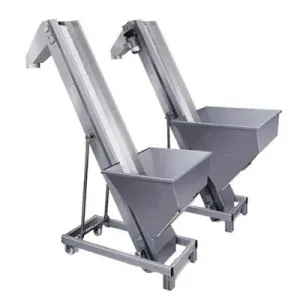
Feeding conveyor
Category: Auxiliary EquipmentBrowse number: 3Number:Release time: 2026-09-01 16:06:44A feeding conveyor is designed to move products or materials smoothly from one processing stage to another. Our feeding conveyor supports automatic packaging lines by providing stable, continuous material transfer. It can be integrated with weighing, filling, sealing, and conveying equipment for food, powder, granule, and industrial material packaging applications.
News
Category:
No search results found!
Case
Category:
No search results found!
Video
Category:
No search results found!
Download
Category:
No search results found!
Job
Category:
No search results found!
Featured Products
No search results found!



 WhatsApp
 Phone
Phone E-mail